In this article
- How Much Pedestrian Deaths Have Increased
- Why Pedestrians Are at Greater Risk
- Where Pedestrian Crashes Happen
- Pedestrians' Legal Rights
- Common Pedestrian Injuries
- Hit-and-Run Crashes
- What to Do After a Pedestrian Crash
- When Road Design Contributes
- What Communities Are Doing
- Children and Older Adults
- Pedestrians and Commercial Vehicles
- Parking Lot Crashes
- Frequently Asked Questions
- Making Streets Safer Starts With Accountability
- Key Takeaways
- How We Can Help
Walking should be one of the safest ways to get around. Yet pedestrian deaths in the United States rose sharply over the past decade. According to analyses by the Governors Highway Safety Association (GHSA), drivers struck and killed more than 7,500 pedestrians in 2022 — the highest number since 1981. Preliminary data for later years showed modest declines, but pedestrian deaths have remained far higher than they were a decade earlier.
Every one of these deaths represents a person who was simply walking — to work, to school, to a bus stop or home. Thousands more pedestrians are injured each year, many seriously. This article looks at why pedestrian deaths rose, where pedestrians are most at risk, and what injured pedestrians and families should know about their legal rights.
How Much Pedestrian Deaths Have Increased
For many years, pedestrian deaths in the United States declined. That trend reversed around 2010. Over the following decade, pedestrian fatalities rose by well over 50 percent, even as deaths among vehicle occupants rose more slowly. By the early 2020s, pedestrians accounted for a substantially larger share of all traffic deaths than they had in the past.
This increase has been concentrated in specific circumstances: at night, on wide, high-speed roads, and away from intersections. These patterns help explain what is going wrong — and where changes could make the biggest difference.
Why Pedestrians Are at Greater Risk
Researchers and safety organizations have pointed to several contributing factors.
Road Design
Many pedestrian deaths occur on arterial roads — wide, multi-lane streets designed to move traffic quickly through areas with homes, shops and bus stops. These roads often lack sidewalks, have long distances between marked crosswalks, and carry traffic at speeds that make crashes deadly. Pedestrians may have to walk long distances to reach a safe crossing, or cross mid-block where drivers do not expect them.
Speed
The speed at which a vehicle strikes a pedestrian has an enormous effect on survival. A pedestrian struck at lower speeds has a much greater chance of surviving than one struck at higher speeds. Roads designed for fast travel encourage higher speeds even where posted limits are lower.
Darkness
A large majority of pedestrian deaths occur after dark. Poor street lighting, dark clothing, and driver impairment and fatigue at night all contribute. Drivers may not see a pedestrian until it is too late to stop.
Larger Vehicles
SUVs and pickup trucks now make up most new vehicle sales. Research has found that vehicles with taller, blunter front ends are more likely to kill pedestrians in a crash, in part because they strike the torso and head rather than the legs. Large vehicles can also have significant blind zones directly in front of them.
Distraction and Impairment
Driver distraction — especially phone use — and impaired driving remain significant factors. Pedestrian impairment can also play a role in some crashes, though it does not excuse a driver's failure to exercise reasonable care.
Where Pedestrian Crashes Happen
Pedestrian crashes occur in many settings, including:
- Mid-block locations on wide arterial roads
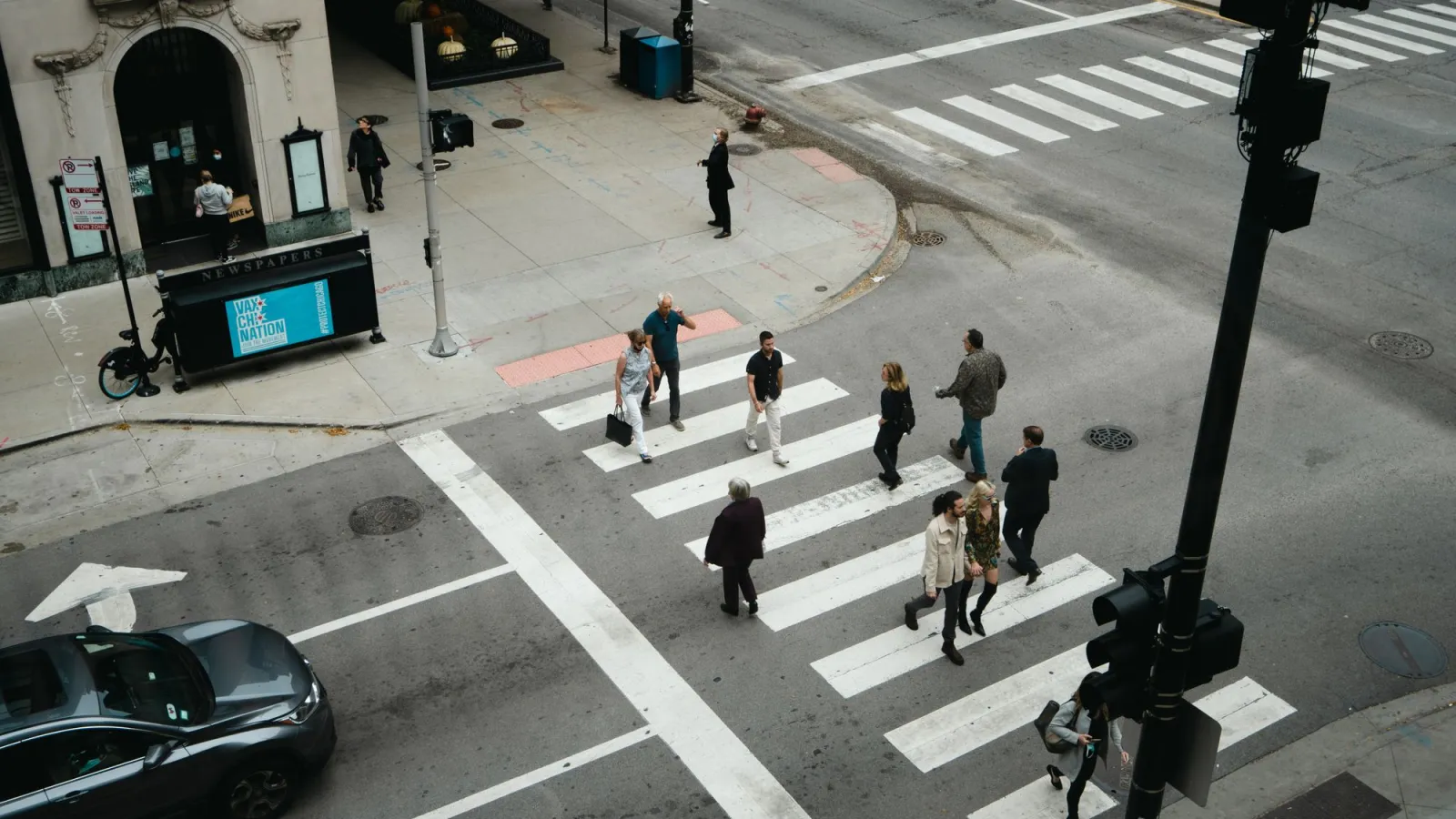
- Intersections, especially when vehicles turn left or right across crosswalks
- Parking lots and driveways, where drivers back up or pull out
- School zones and residential neighborhoods
- Bus stops and transit stations
- Rural roads without sidewalks or shoulders
- Highway shoulders, when people exit disabled vehicles
Pedestrians' Legal Rights
Right of Way
State traffic laws generally require drivers to yield to pedestrians in crosswalks, whether marked or unmarked at intersections. Drivers must also exercise due care to avoid striking pedestrians anywhere on the road, including outside crosswalks. Pedestrians have duties too, such as obeying signals and not suddenly stepping into the path of a vehicle that cannot stop. How these duties apply depends on state law and the facts of each crash.
Comparative Fault
In many states, a pedestrian who was partly at fault — for example, crossing outside a crosswalk — can still recover compensation, though the amount may be reduced by their share of fault. A few states apply stricter rules that can bar recovery if the injured person was at fault at all or above a threshold. Insurance companies often try to shift blame to pedestrians, so careful investigation matters.
Insurance Coverage for Pedestrians
Pedestrians may have more insurance options than they realize:
- The at-fault driver's liability insurance
- The pedestrian's own auto insurance, which in many states may provide personal injury protection (PIP) or medical payments coverage even when the person was walking
- The pedestrian's own uninsured or underinsured motorist coverage, if the driver had no insurance, too little insurance, or fled the scene
- Coverage from a household member's auto policy in some situations
- Commercial insurance if the driver was working, such as a delivery or rideshare driver
Common Pedestrian Injuries
Pedestrians have no protection in a collision, so injuries are often severe:
- Traumatic brain injuries
- Leg, knee, hip and pelvic fractures
- Spinal injuries
- Internal injuries
- Facial and head injuries
- Road rash, lacerations and scarring
- Fatal injuries
Recovery can take months or years, and some pedestrians are left with permanent disabilities.
Hit-and-Run Crashes
A significant share of pedestrian crashes involve drivers who leave the scene. Hit-and-run crashes are especially traumatic because victims may not know who struck them. Steps that can help include calling police immediately, seeking witnesses and nearby surveillance footage, and checking with local businesses for cameras. Your own uninsured motorist coverage may provide compensation even if the driver is never found.
What to Do After a Pedestrian Crash
- Call 911 and get medical care immediately
- Make sure police respond and complete a report
- Get the driver's name, insurance and vehicle information, if possible
- Collect contact information from witnesses
- Photograph the scene, including crosswalks, signals, lighting and vehicle damage
- Note nearby businesses or homes that may have cameras
- Notify your own insurance company as required by your policy
- Avoid giving recorded statements to the driver's insurer before getting advice
- Keep records of medical treatment, missed work and expenses
- Speak with an attorney about your rights
When Road Design Contributes
In some pedestrian crashes, dangerous road design or poor maintenance contributes to the harm — for example, missing crosswalks, malfunctioning signals, inadequate lighting or obstructed sight lines. Government entities responsible for roads may share responsibility. Claims against government entities often require formal notice within strict and sometimes very short deadlines, and immunity rules may limit claims. Acting quickly is essential.
What Communities Are Doing
Many cities have adopted strategies to reduce pedestrian deaths, including:
- Lowering speed limits in dense areas
- Adding sidewalks, crosswalks, refuge islands and curb extensions
- Installing pedestrian hybrid beacons and leading pedestrian intervals at signals
- Improving street lighting
- Redesigning wide arterial roads
- Using automated speed enforcement where permitted by state law
New vehicle technology, including automatic emergency braking with pedestrian detection, may also help over time as vehicles are replaced.
Children and Older Adults
Children and older adults face particular risks as pedestrians. Children are smaller and harder for drivers to see, especially from tall vehicles, and they may have difficulty judging the speed and distance of traffic. Many child pedestrian injuries happen in residential neighborhoods, school zones and driveways, including "back-over" crashes in which a vehicle backs into a child the driver cannot see.
Older adults may walk more slowly and may need more time to cross wide streets than signal timing allows. They are also more likely to suffer severe injuries, such as hip fractures and head injuries, and their recovery can be longer and more complicated. Claims involving older pedestrians must account for the effect of injuries on independence and quality of life.
When a child is injured, special legal rules often apply. Many states require court approval of settlements for minors, and deadlines may be extended for children's claims, although claims against government entities may still require prompt notice.
Pedestrians and Commercial Vehicles
Delivery vans, box trucks, buses, garbage trucks and rideshare vehicles spend much of their time in areas with heavy pedestrian activity. Commercial drivers often operate under time pressure, make frequent stops, and back up or turn in tight spaces. When a commercial vehicle strikes a pedestrian, the employer may be responsible for its driver's negligence, and commercial insurance policies typically provide higher coverage limits than personal policies. Identifying the company behind the vehicle is an important step after a crash.
Rideshare vehicles raise their own insurance questions. Coverage depends on whether the driver was logged into the app and whether a trip was in progress. Screenshots, witness information and the vehicle's identifying details can help establish what coverage applies.
Parking Lot Crashes
Parking lots are deceptively dangerous. Drivers searching for spaces or backing out may not watch for pedestrians, and lots often lack clear walkways. Some parking lot crashes raise questions about the property owner's responsibility for lot design, lighting and signage, in addition to the driver's negligence. Because parking lots are private property, police may handle reports differently, so it is important to document the scene and gather witness information.
Frequently Asked Questions
I was jaywalking when I was hit. Can I still recover compensation?
In many states, yes, though your recovery may be reduced by your share of fault. Drivers still have a duty to exercise reasonable care to avoid hitting pedestrians. The specific rules depend on your state.
Will my health insurance pay my medical bills?
Health insurance may pay many medical bills, but your health insurer may have a right to be reimbursed from any injury settlement. Auto insurance benefits like PIP or medical payments may also apply. An attorney can help coordinate these sources.
How long do I have to file a claim?
Deadlines depend on your state and the parties involved. Claims against government entities can require notice within a very short time. Speak with an attorney as soon as possible.
What if I was hit while walking to my car after a crash or breakdown?
People who leave a disabled vehicle on a highway shoulder are especially vulnerable. Claims may involve the driver who struck them and, depending on the circumstances, others whose conduct contributed. Your own auto policy may also provide coverage.
Making Streets Safer Starts With Accountability
Pedestrian safety improvements often follow public attention to dangerous corridors. Residents who notice dangerous conditions — missing crosswalks, broken signals, dark stretches of road — can report them to local transportation departments. Documenting and reporting hazards not only helps prevent future crashes; it can also create a record showing that a government entity had notice of a dangerous condition, which may matter if someone is later injured there. Legal claims, too, contribute to accountability by placing the cost of unsafe conduct on those responsible rather than on injured pedestrians and their families.
Pedestrians can also take practical steps to reduce risk where possible: crossing at marked crosswalks and signals when available, making eye contact with drivers before stepping into the street, wearing bright or reflective clothing at night, and staying alert around driveways and parking lots. These precautions do not shift responsibility away from drivers, who must always exercise reasonable care — but they can help pedestrians stay safer on roads that are not yet designed with them in mind.
Key Takeaways
- Pedestrian deaths in the United States reached their highest level in about four decades in 2022 and have remained elevated.
- Most pedestrian deaths occur at night, on wide high-speed roads and away from intersections.
- Drivers must exercise due care to avoid pedestrians, and pedestrians who were partly at fault may still recover compensation in many states.
- Your own auto insurance, including uninsured motorist coverage, may provide benefits even when you were walking.
- Government entities may share responsibility when road design contributes, but strict notice deadlines apply.
How We Can Help
At Personal Injury Lawyer Pro, our pedestrian accident attorneys investigate crashes, identify every source of insurance coverage and pursue full compensation for injured pedestrians and families. If you were struck by a vehicle, contact us for a free, confidential consultation. You pay no attorney fee unless we recover compensation for you.

Daniel Foster is an Associate at Personal Injury Lawyer Pro who handles Premises Liability cases — slip and fall accidents, dog bites, negligent security, swimming pool incidents and injuries caused by unsafe rental properties.
View ProfileRelated News
Federal Automatic Emergency Braking Rule: What It Means for Crash Victims and Injury Claims
NHTSA's final rule will require automatic emergency braking, including pedestrian detection, on nearly all new passenger vehicles. Here is what the rule requires, when it takes effect and how it could shape future injury claims.
U.S. Traffic Deaths Have Declined From Their Pandemic-Era Peak — But Roads Remain Dangerous
Federal estimates show traffic fatalities falling from the highs of 2021 and 2022, yet tens of thousands of people still die on American roads each year. We look at what the numbers mean for drivers, pedestrians and injury victims.

The Camp Lejeune Claims Window Has Closed: What Happens Now for Veterans and Families
The Camp Lejeune Justice Act gave people exposed to contaminated water a two-year window to file administrative claims, which ended in August 2024. Here is how the process works now and what claimants should expect.