In this article
- Who Can Be Responsible?
- The Traditional Visitor Categories
- Proving Notice
- Open and Obvious Hazards
- Common Premises Liability Claims
- Evidence in Premises Liability Cases
- Ice and Snow
- Injuries on Government Property
- Frequently Asked Questions
- Landlord Responsibilities
- Retail and Restaurant Falls
- Hotels, Venues and Public Accommodations
- Injuries to Children on Property
- Key Takeaways
- How We Can Help
Every day, people are injured on property owned or controlled by someone else — slipping on a wet floor in a grocery store, falling down a poorly lit apartment stairway, being bitten by a dog in a neighbor's yard, or being assaulted in a parking garage with broken lights. Premises liability is the area of law that determines when property owners and occupiers are responsible for these injuries.
The core principle is simple: those who own or control property must take reasonable steps to keep it safe for people who are lawfully there. But the details — how much care is owed, to whom, and what the injured person must prove — vary by state and by circumstance. This guide explains how premises liability claims work.
Who Can Be Responsible?
Premises liability claims can be brought against those who own, occupy, control or maintain property, including:
- Property owners
- Businesses that lease and operate the premises, such as stores and restaurants
- Landlords, for common areas and repairs they are obligated to make
- Property management companies
- Maintenance, cleaning and security contractors
- Government entities that own public property, subject to special rules
Identifying who controlled the specific area where the injury occurred is often an important early step.
The Traditional Visitor Categories
Many states determine the duty owed to a visitor based on the visitor's legal status. The traditional categories are:
Invitees
Invitees are people invited onto the property for a business purpose or as members of the public for a purpose for which the property is open — for example, customers in a store, diners in a restaurant, or visitors to a public building. Property owners owe invitees the highest duty: to use reasonable care to inspect the property, discover dangerous conditions, and fix them or warn about them.
Licensees
Licensees are people who enter property with the owner's permission but for their own purposes, such as social guests. Property owners generally must warn licensees of known dangerous conditions that the licensee is unlikely to discover, but they may not have a duty to inspect for unknown hazards.
Trespassers
Trespassers enter property without permission. Property owners generally owe trespassers only a limited duty — typically to avoid willful or wanton injury. However, there are important exceptions, particularly for children.
The Attractive Nuisance Doctrine
Children may not recognize dangers that adults would. Under the attractive nuisance doctrine recognized in many states, a property owner may be liable for injuries to trespassing children caused by artificial conditions — such as swimming pools, machinery or abandoned structures — that are likely to attract children, when the owner knew or should have known children were likely to trespass and failed to take reasonable precautions.
States That Have Modified the Categories
Some states have abolished or merged these categories, applying a general standard of reasonable care to all lawful visitors, or to everyone, considering the visitor's status as one factor. Knowing which approach your state follows is essential.
Proving Notice
In most premises liability claims involving dangerous conditions, the injured person must show that the owner knew or should have known about the hazard. This is called notice.
Actual Notice
Actual notice means the owner or its employees actually knew about the hazard — for example, a customer reported a spill to an employee, or the hazard was recorded in an incident log.
Constructive Notice
Constructive notice means the hazard existed long enough that the owner should have discovered it through reasonable inspection. Evidence might include the condition of the hazard (such as a spill with footprints and cart tracks through it, suggesting it had been there a while), inspection logs showing no checks for an extended period, or video showing the hazard existed for some time.
Owner-Created Hazards
When the owner or its employees created the hazard — for example, mopping without warning signs, or stacking merchandise unsafely — many states do not require separate proof of notice.
Mode of Operation
Some states recognize a "mode of operation" approach in self-service businesses. If a business's method of operating makes certain hazards foreseeable — such as produce on floors near self-service bins — the injured person may not need to prove notice of the specific hazard.
Open and Obvious Hazards
Property owners often argue that a hazard was "open and obvious," meaning a reasonable person would have seen and avoided it. States treat this argument differently:
- In some states, an open and obvious hazard may eliminate or limit the owner's duty
- In others, it is considered as part of comparative fault, potentially reducing but not eliminating recovery
- Exceptions may apply when the owner should have anticipated harm despite the obviousness, such as when visitors are distracted by displays or have no reasonable alternative route
Common Premises Liability Claims
Slip and Fall and Trip and Fall
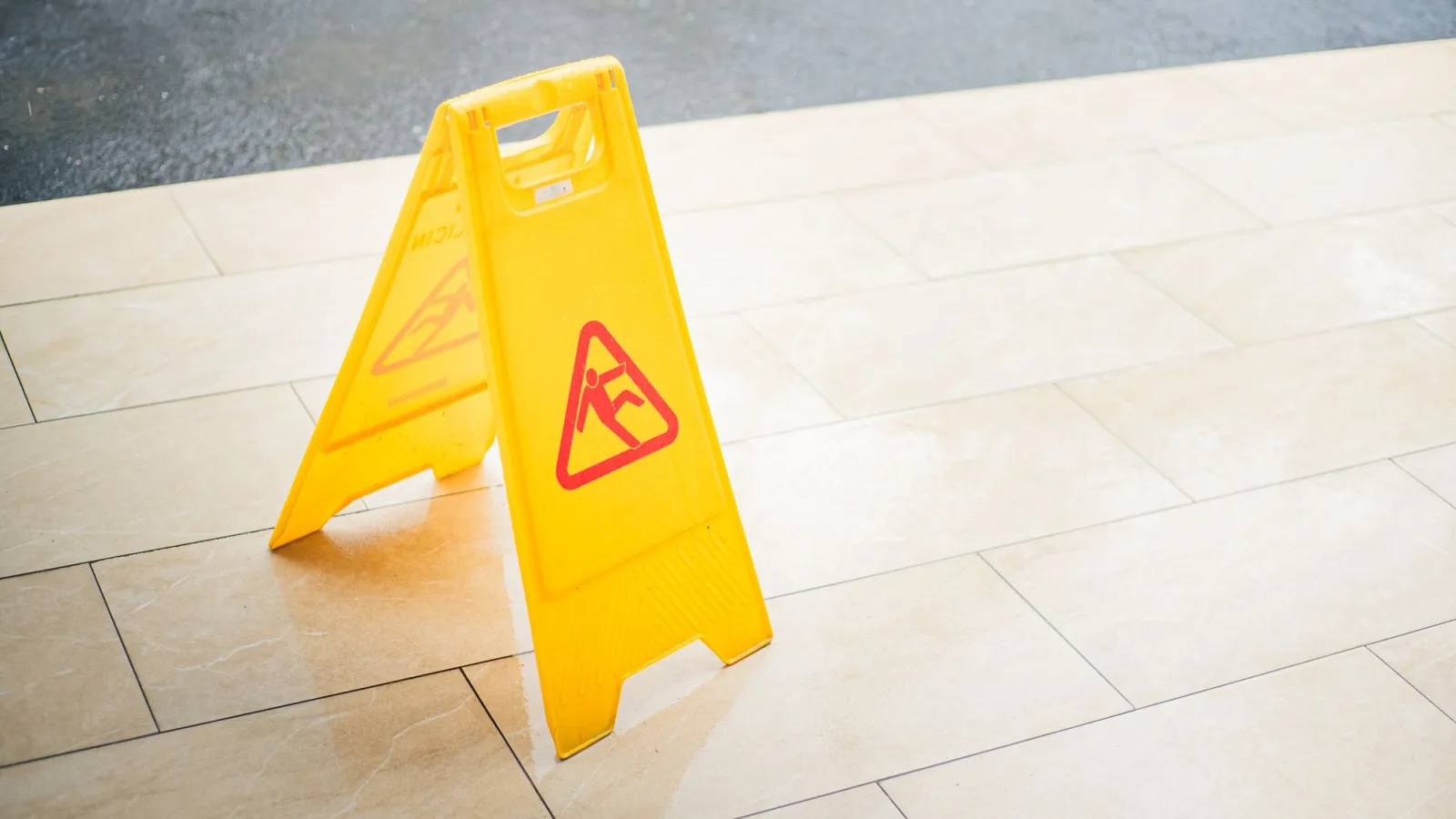
Falls caused by wet floors, spills, ice and snow, loose mats, uneven flooring, damaged stairs, missing handrails and poor lighting are among the most common premises claims. Falls can cause hip fractures, wrist fractures, head injuries and back injuries — especially serious for older adults.
Negligent Security
When a property owner fails to provide reasonable security — such as adequate lighting, functioning locks, security personnel or cameras — and a foreseeable criminal attack occurs, the owner may be responsible. Foreseeability is often shown through prior similar incidents at or near the property.
Swimming Pool Accidents
Pool owners must take reasonable precautions such as fencing, gates, covers, signage and, in some settings, lifeguards. Drowning and near-drowning incidents can cause brain injuries or death.
Elevator and Escalator Accidents
Malfunctions such as mis-leveling, sudden drops and door failures may involve the property owner and the maintenance company.
Falling Objects
Merchandise falling from high shelves, ceiling tiles, and construction materials can cause head and neck injuries.
Dog Bites
Dog bite claims may be governed by specific statutes in addition to premises principles. Landlords may be responsible in some situations where they knew of a dangerous dog.
Inadequate Maintenance
Broken railings, rotted decks, collapsed balconies, and defective stairs can result from failure to maintain property over time.
Evidence in Premises Liability Cases
Evidence can disappear quickly after an incident. Important evidence includes:
- Photographs of the hazard, the surrounding area and lighting conditions
- Surveillance video, which businesses may overwrite quickly
- Incident reports prepared by the business
- Inspection, cleaning and maintenance logs
- Prior complaints and prior similar incidents
- Witness names and statements
- Your shoes and clothing
- Building code requirements and violations
- Weather records for ice and snow cases
If you are injured, report the incident to the manager, request that the incident be documented, and ask that video be preserved. An attorney can send a formal preservation letter.
Ice and Snow
Ice and snow cases follow special rules in many states. Some states apply a "natural accumulation" rule, limiting owners' liability for naturally accumulated ice and snow, while holding them responsible for unnatural accumulations, such as ice formed from a leaking gutter. Others impose a duty to take reasonable steps within a reasonable time after a storm. Municipal ordinances may require property owners to clear sidewalks.
Injuries on Government Property
Claims arising from injuries on public sidewalks, in government buildings, or in parks are subject to special rules, including short notice-of-claim deadlines, immunity provisions and sometimes damage caps. Prompt action is essential.
Frequently Asked Questions
What should I do immediately after a fall?
Get medical care, report the incident, photograph the hazard, collect witness information, keep your shoes and clothing, and ask that video be preserved.
The store says it inspects every hour. Does that defeat my claim?
Not necessarily. The question is whether inspections were actually performed and were reasonable under the circumstances. Inspection logs may be incomplete or inaccurate, and video can show what really happened.
Can I bring a claim if I was a guest at a friend's home?
Possibly. Homeowners insurance often covers these claims. The duty owed depends on state law and the circumstances.
What if I tripped on a broken public sidewalk?
The city or the adjacent property owner may be responsible, depending on local law. Notice deadlines for government claims can be very short.
Does it matter that I didn't report the fall right away?
Reporting promptly is best, because it creates a record and helps preserve evidence. But a delayed report does not automatically defeat a claim. Medical records, witnesses and other evidence can still establish what happened. If you have not yet reported an incident, do so as soon as possible and request that video and records be preserved.
Will the business's insurance company pay my medical bills right away?
Some commercial policies include medical payments coverage that pays limited medical expenses regardless of fault. Larger claims are typically evaluated as liability claims, which take longer.
Landlord Responsibilities
Tenants and their guests are often injured in apartment buildings and rental homes. Whether a landlord is responsible depends on who controlled the area where the injury occurred and what the lease and state law require.
Landlords are generally responsible for maintaining common areas — hallways, stairwells, lobbies, parking lots, laundry rooms, pools and walkways — in reasonably safe condition. Inside a rental unit, the tenant often has primary control, but landlords may be responsible for hazards they were required to repair, hazards that existed when the lease began and were not disclosed, or repairs that were performed negligently. Many states also impose an implied warranty of habitability and building code obligations, such as functioning smoke detectors, secure locks, safe electrical systems and sound stairs.
Repair requests are important evidence. Tenants should make repair requests in writing and keep copies. A documented request that went unanswered can establish that the landlord knew about a hazard.
Retail and Restaurant Falls
Stores and restaurants are among the most common settings for premises liability claims. Retailers know that customers will be looking at merchandise rather than the floor, and many operate under policies requiring regular floor inspections or "sweeps." Evidence that sweeps were skipped, that employees walked past a hazard without addressing it, or that a leak or spill was a recurring problem can be powerful. Restaurants present additional hazards, such as grease, spilled drinks, and wet entryways in bad weather.
Businesses often prepare incident reports immediately after a fall and may take their own photographs. Those materials, along with video, can be obtained through the claims process or litigation. It is important that the injured person also document the scene independently when possible.
Hotels, Venues and Public Accommodations
Hotels, stadiums, arenas, theaters and event venues host large numbers of people and must account for crowd movement, lighting, stairs and security. Injuries in these settings may involve multiple parties — the owner, an operator, an event promoter, security contractors and maintenance companies. Contracts among these parties can affect who is responsible, and identifying each party early prevents deadlines from passing against an overlooked defendant.
Injuries to Children on Property
Children are naturally curious and may not appreciate dangers adults recognize. Property owners who invite children — such as stores with play areas, apartment complexes with playgrounds, or homes with pools — must take into account children's limited judgment. Pools, trampolines, unsecured furniture and televisions, and accessible chemicals are common hazards. Claims involving children may also have special deadline rules and court approval requirements for settlements.
Key Takeaways
- Property owners and occupiers must take reasonable steps to keep their premises safe for lawful visitors.
- The duty owed may depend on whether the visitor is an invitee, licensee or trespasser, though some states have modified these categories.
- Most claims require proof that the owner knew or should have known about the hazard.
- Open and obvious hazard arguments are treated differently from state to state.
- Evidence such as video and inspection logs should be preserved immediately.
How We Can Help
At Personal Injury Lawyer Pro, our premises liability attorneys investigate quickly to secure video, records and witness testimony, and we hold property owners accountable for unsafe conditions. If you were injured on someone else's property, contact us for a free, confidential consultation. You pay no attorney fee unless we recover compensation for you.

Daniel Foster is an Associate at Personal Injury Lawyer Pro who handles Premises Liability cases — slip and fall accidents, dog bites, negligent security, swimming pool incidents and injuries caused by unsafe rental properties.
View ProfileRelated Articles
What to Do After a Car Accident: A Complete Step-by-Step Guide to Protecting Your Health and Your Claim
The minutes, days and weeks after a car accident shape both your recovery and your legal rights. This comprehensive guide walks through every step — from the crash scene to settlement — and the mistakes to avoid.

How Personal Injury Settlements Are Calculated: Economic Damages, Pain and Suffering, and the Factors Insurers Weigh
There is no simple formula for valuing an injury claim. This guide explains the categories of damages, how insurers evaluate claims, and the factors that increase or reduce settlement value.

Comparative Negligence Explained: How Shared Fault Affects Your Personal Injury Claim
What happens when more than one person is at fault for an accident? This guide explains pure comparative negligence, modified comparative negligence, contributory negligence, and how insurers use fault to reduce claims.